By Chris Hoff
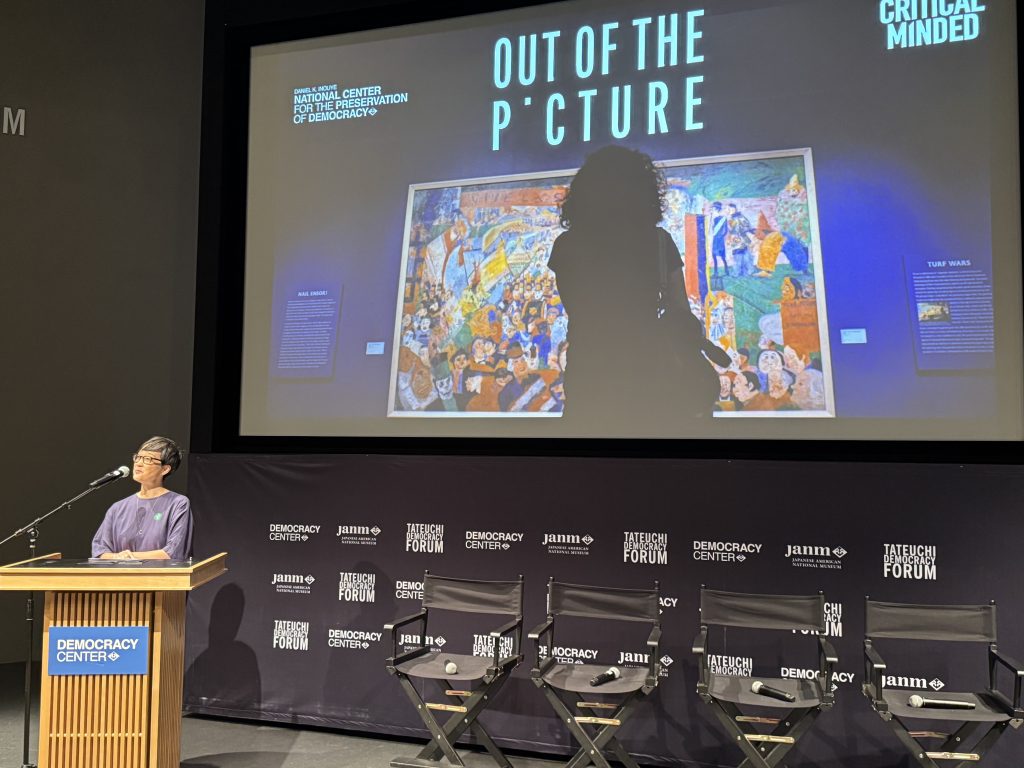
This week I attended a screening of “Out of The Picture” at the National Center for the Preservation of Democracy in Los Angeles. The documentary “Out of The Picture” chronicles the decline of arts criticism over a several year period culminating during COVID years. The movie, featuring many of the more prominent art critics, documents the accelerated change in arts writing over the last several years. A story we are all quite familiar with now. Except for a short mention of some trying new ways to generate audiences, like The White Pube for example, there was little in what the future might hold for those of us interested in continuing to look at, discuss, and write about the arts.
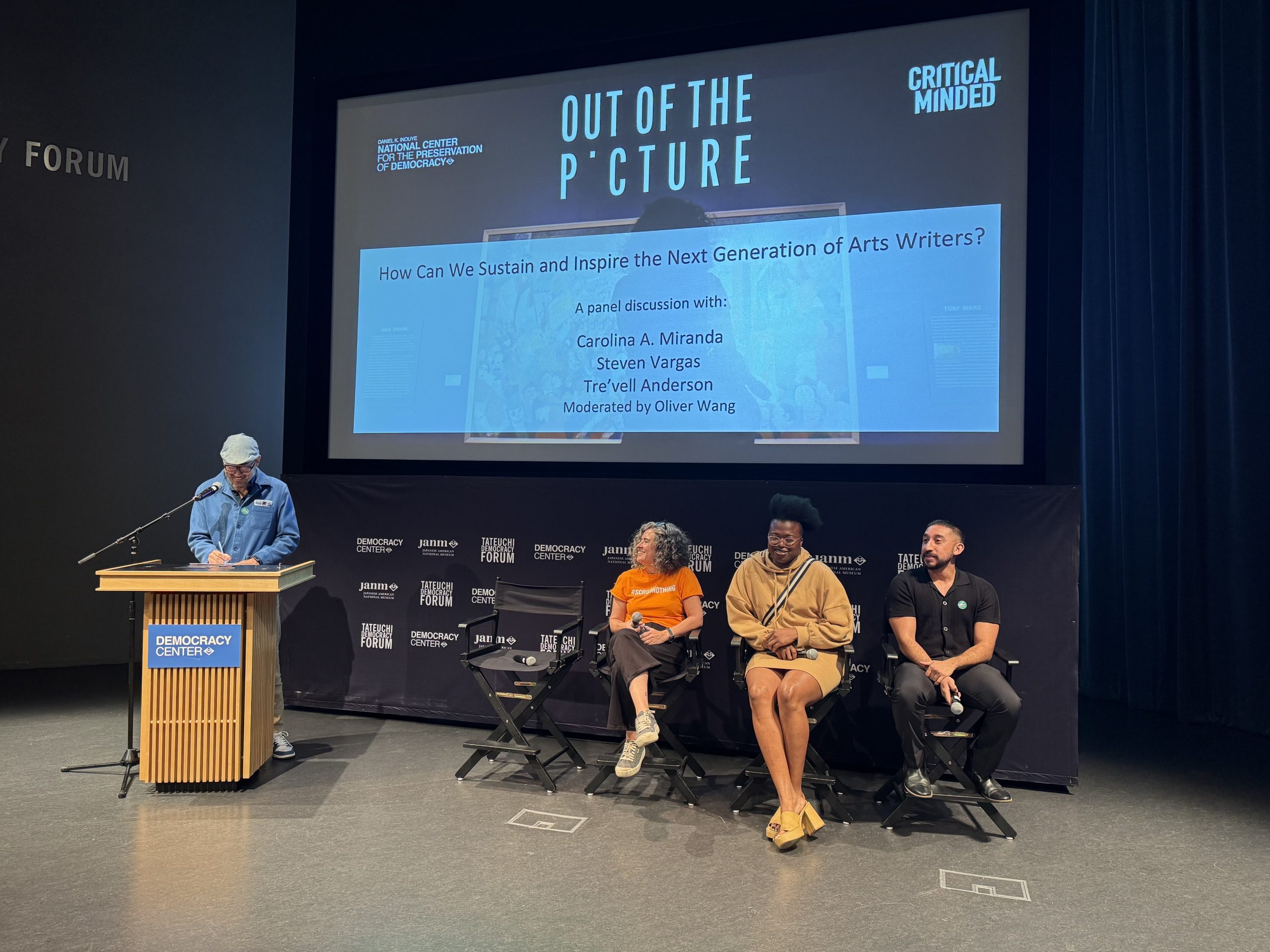
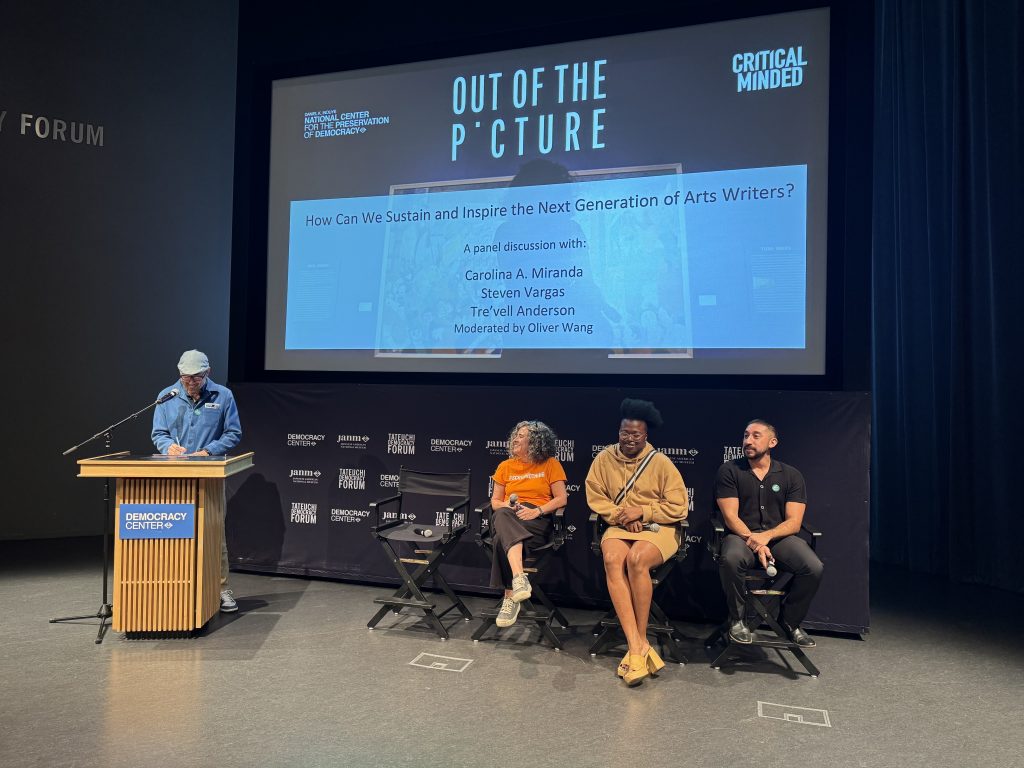
Fortunately, there was a panel after the showing that filled the gap. Moderated by Oliver Wang, a sociology professor at CSU Long Beach and curator of the exhibition “Cruising J-Town,” the conversation brought together three voices representing different stages of the criticism ecosystem: Carolina Miranda, an independent culture writer whose work appears in The Atlantic and The New York Review of Books; Stephen Vargas, a journalist and former LA Times arts reporter; and Tre’vell Anderson, founder of the media production house Slayzhon and author of We See Each Other: A Black Trans Journey Through TV and Film.
So, what did I learn?
The Death of the Old Guard
The panel didn’t sugarcoat the current state of arts journalism. “I honestly don’t know if the publications that exist now will be around to host [the next generation of critics],” Miranda said, reflecting on her decade-long journey documented in the film. Her observation cuts to the heart of the industry’s existential crisis, it’s not just that older critics aren’t making room for younger ones, but that the institutions themselves are disappearing.
The collapse extends beyond major publications to what Miranda called the “critical feeder” system. Alternative weeklies, once the training ground where emerging critics could find mentorship and develop their voices, have largely vanished. This leaves young writers “desperate to connect with mentors” and asking basic questions like “who could I pitch this to?”
Vargas, representing the emerging generation, described the financial reality starkly: publications “aren’t paying a lot for the stuff that we’re writing,” with Anderson noting that critics now receive as little as $150 for full pieces. (Disclosure: OC Art Blog pays .25 a word in alignment with W.A.G.E. standards)
New Models, New Challenges
Despite the dire landscape, innovative approaches are emerging. The panelists highlighted several promising developments:
Worker-owned media cooperatives are sprouting up, publications like 404 (technology), Hell Gate (New York), and the upcoming Coyote (San Francisco) are owned collectively by their writers. As Miranda described it, these represent “very small collectives of writers who have come together to do these projects and they’re almost like supporting each other.”
Independent production has become a survival strategy. Anderson’s Slayzhon produces podcasts and experiential criticism events, while many critics have launched Substacks or other independent platforms. “We’re all trying to figure out how to navigate it,” Anderson said, summarizing the entrepreneurial spirit driving much of today’s criticism.
Nonprofit organizations like Critical Minded are attempting to fill the mentorship void left by collapsed newsroom structures, though their reach remains limited.
The Multimedia Mandate
Perhaps the most significant shift is the expectation that critics master multiple formats. Entry-level positions now routinely require writers to produce newsletters, create videos, manage social media, and develop their work into “brands.”
“They ask a lot more out of the entry-level so they can pay them less,” Vargas explained, describing his former LA Times position that combined newsletter writing, feature stories, and social media management. The New York Times has similarly transitioned critics into roles that “experiment with new media and do videos and do writing and do it all.”
This multimedia expectation reflects both opportunity and exploitation. While critics can now reach audiences through podcasts, video essays, and social media, they’re also expected to be one-person media companies, often without additional compensation.
Advice for the Next Generation?
When asked for practical advice, the panelists offered a mix of pragmatism and idealism:
Focus and flexibility: Miranda recommended specializing in one area before expanding, while also suggesting (jokingly) that critics learn data journalism for financial stability. Vargas advocated for “making the most out of every opportunity” and approaching each position knowing it’s temporary but working toward coming out of each project with something that will get you the next project.
Know your why: Anderson’s advice was perhaps the most profound, understand your deeper purpose. “Know why you want to be a critic,” she urged. Her own motivation centers on elevating voices from her community: “making sure that the conversations that I’m having with my people…around the dinner table…are uplifted and regarded as important perspectives.”
An Industry in Transition
The panel painted a picture of an industry where traditional career paths have crumbled, but new forms of community and criticism are emerging. Critics today must be entrepreneurial, multimedia-savvy, and driven by clear personal missions rather than conventional career advancement.
While the financial prospects remain grim, there’s potential for more diverse voices and experimental formats as critics create their own platforms. The challenge lies in building sustainable models that can support this work long-term.
As the discussion concluded with recommendations for current critics making innovative work, it became clear that despite the industry’s upheaval, or perhaps because of it, criticism itself continues to evolve and find new forms of expression.
The future of arts criticism may be uncertain, but as these three voices demonstrated, it’s far from over. It’s simply being written by different people, in different formats, for different reasons than ever before.
“Out of The Picture” continues to screen at various venues. For more information about Critical Minded‘s work supporting critics of color, visit their website.